You Shouldn't Have to Plan Your Life Around a Bathroom.
Laugh More. Travel More. Sleep Better. Live More.
Maybe it started with a few drops when you laughed.
Then you started wearing a pad "just in case."

Now you find yourself scouting bathrooms everywhere you go, saying no to long walks, or thinking twice before a road trip.
Maybe you've even stopped jumping on the trampoline with your grandkids because... well... you know what might happen.
If this sounds familiar, you're not alone.
Millions of women notice bladder changes after menopause.
The good news?
Bladder leaks may be common after menopause—but they don't have to become your new normal.
At Ascend Chiropractic in Lincoln, we help women strengthen their pelvic floor with Emsella®, a completely non-invasive treatment that helps support bladder control, pelvic strength, and confidence—so you can spend less time worrying about your bladder and more time enjoying your life.
Menopause Changes Your Body. It Doesn't Mean You Have to Settle.
As estrogen naturally declines, your body goes through changes that affect far more than hot flashes.
The muscles and tissues supporting your bladder also change.
Over time, you may notice:
- Leaking when you laugh, cough, or sneeze
- Feeling like you always need to know where the nearest restroom is
- Waking two, three, or even four times every night
- Wearing pads every day "just in case"
- Rushing to the bathroom and hoping you make it in time
- Feeling less confident traveling or exercising
- Changes in intimacy after menopause
Many women assume:
"I guess this is just part of getting older."
It isn't.
You Deserve Better Than Just Managing It
For years, many women are told to:
Wear thicker pads.
Drink less water.
Go to the bathroom "just in case."
Avoid coffee.
Avoid long car rides.
Avoid laughing too hard.
But none of those things strengthen the muscles causing the problem.
They simply help you manage it.
At Ascend, we'd rather help you address one of the underlying causes: a weakened pelvic floor.
Imagine Not Thinking About Your Bladder All Day
Imagine...
❤️ Going to your granddaughter's soccer game without wondering where the restroom is.
❤️ Sleeping through the night without multiple bathroom trips.
❤️ Sneezing without crossing your legs.
❤️ Traveling without packing extra pads.
❤️ Wearing white pants again.
❤️ Going for walks simply because you enjoy them.
❤️ Feeling confident saying "yes" instead of worrying about leaks.
That's why so many women tell us:
"I wish I had done this years ago."
More Than Just Fewer Bladder Leaks
Many women are surprised that improving their pelvic floor doesn't just change how often they leak.
They often tell us they feel:
- More confident leaving the house
- Less anxious during long drives
- More comfortable exercising
- Better rested after fewer nighttime bathroom trips
- Stronger through their core
- More confident during intimacy
Sometimes the biggest change isn't physical.
It's finally feeling like your bladder isn't running your life anymore.
Is Emsella Right for You?
You may be a great candidate if you:
✓ Leak when laughing, coughing, or sneezing.
✓ Wear pads or liners "just in case"
✓ Wake each night to urinate.
✓ Always know where the closest bathroom is.
✓ Have noticed bladder changes after menopause.
✓ Don't want to get any worse
✓ Want a non-surgical solution.
What Is Stress Urinary Incontinence?
Stress urinary incontinence happens when pressure is placed on the bladder.
Common triggers include:
- Coughing
- Sneezing
- Laughing
- Running
- Jumping
- Lifting groceries
- Exercising
If the pelvic floor muscles aren't providing enough support, urine leakage can occur.
While Kegel exercises are often recommended, many women struggle to perform them correctly, or simply aren't able to generate enough muscle contraction for meaningful improvement. That's where Emsella can help.
What is Urge Urinary Incontinence? (Overactive Bladder)
Urge urinary incontinence happens when the bladder contracts unexpectedly, creating a sudden, overwhelming need to urinate.
Common symptoms include:
- A sudden, difficult-to-control urge to urinate
- Frequent trips to the bathroom (often more than 8 times a day)
- Waking multiple times at night to urinate
- Leaking urine before reaching the toilet
- Feeling like you always need to know where the nearest restroom is
Unlike stress incontinence, urge incontinence isn't caused by coughing or sneezing. Instead, the bladder becomes overactive and sends signals that it's time to empty—even when it isn't full.
This can make everyday activities stressful, from road trips and shopping to exercise and sleeping through the night.
Emsella strengthens the pelvic floor muscles that help support healthy bladder function and improve bladder control. Many patients notice fewer urgent trips to the bathroom, less leakage, and greater confidence in their daily lives.
Did you know?
Many women experience both stress incontinence and urge incontinence. This is called mixed urinary incontinence, and it often responds well to pelvic floor re-training with Emsella.
How Emsella Helps After Menopause
What if you could strengthen your pelvic floor without adding one more exercise to your routine?
After menopause, the pelvic floor muscles can lose strength and coordination—making it harder to control your bladder the way you used to. That can show up as leaking when you laugh or exercise, sudden urges to go, frequent bathroom trips, or waking up multiple times during the night.
Emsella helps rebuild that strength.
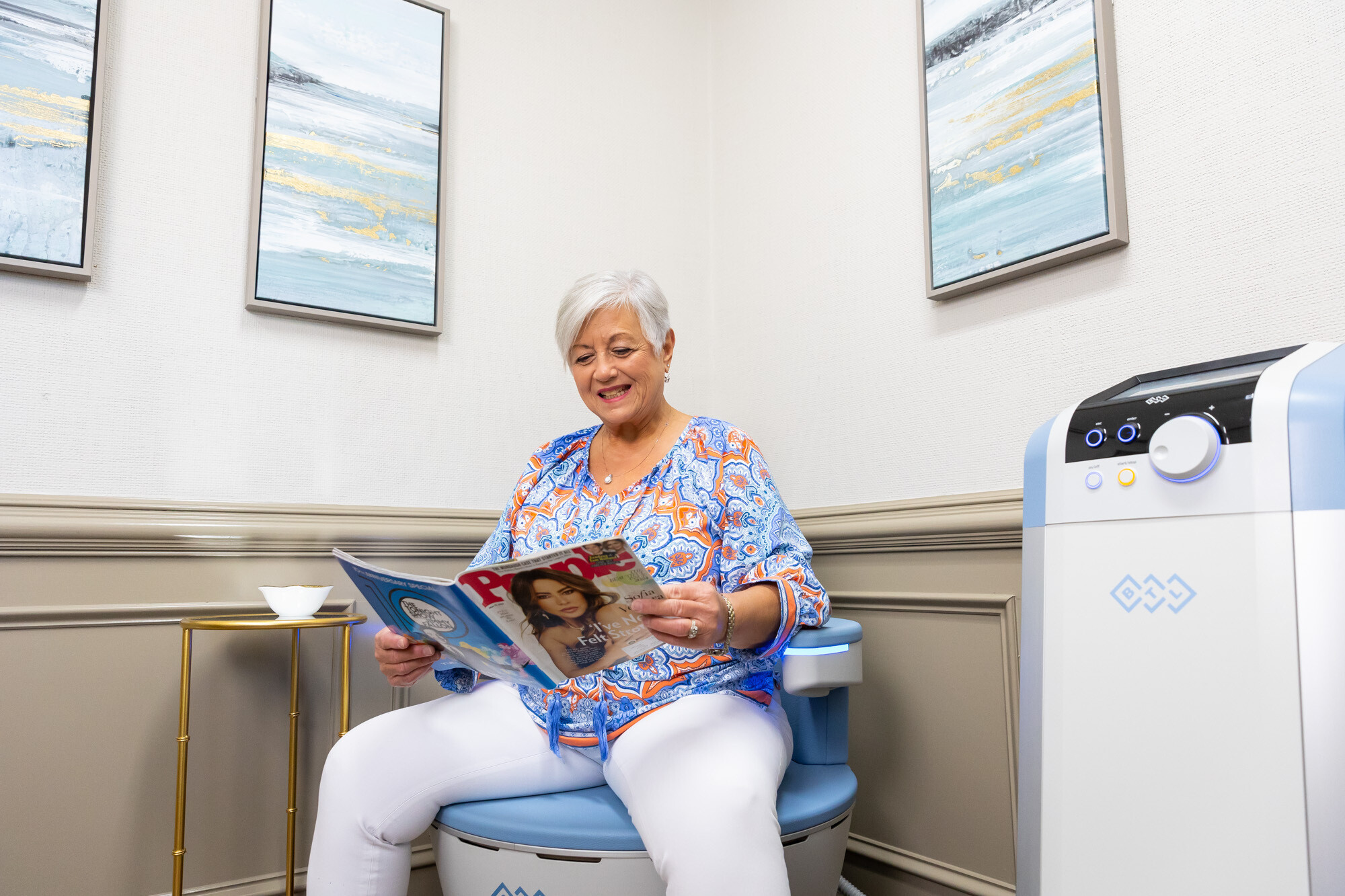
During a single 28-minute treatment, Emsella uses High-Intensity Focused Electromagnetic (HIFEM®) technology to create thousands of deep pelvic floor muscle contractions—far more than you could realistically perform on your own.
Think of it as an intense workout for the muscles that help support your bladder and give you better urinary control.
Women often notice improvements in:
- Bladder leakage
- Sudden urinary urgency
- Frequent bathroom trips
- Waking up at night to urinate
- Confidence during exercise
- Confidence while traveling or being away from a bathroom
- Overall quality of life
And the easiest part?
You stay fully clothed and simply sit comfortably in the Emsella chair while it does the work for you.
No surgery. No downtime. No recovery.
Just 28 minutes focused on rebuilding strength in muscles that may have been weakening for years.
Your Pelvic Floor Is Part of Your Core
What if you want to feel stronger everywhere—not just have fewer bladder leaks?
Your pelvic floor doesn't work alone.
It works together with your abdominal muscles to support your pelvis, stabilize your body, and manage pressure through your core.
As we get older, it's common for both areas to lose strength. You may notice bladder leaks—but you may also notice pelvic pressure or heaviness, prolapse symptoms, a weaker core, or that stubborn lower-belly "pooch" that doesn't seem to budge.
That's where strengthening the abdomen can become an important part of the conversation.
Why Your Abdominal Muscles Matter
When the abdominal wall is weak or poorly coordinated, pressure through the abdomen and pelvis may not be managed as effectively. Improving core strength and learning to better support the abdomen can help create a stronger foundation for everyday movement.
For women dealing with pelvic pressure or prolapse symptoms, we also pay attention to how you carry and manage pressure through your abdomen—not just the pelvic floor itself.
And yes... there's a vanity benefit, too.
You can want to improve your pelvic health and want your stomach to look better. There's nothing wrong with that.
That's Where The Abdominal Treatment Comes In
The abdominal applicator combines powerful muscle contractions with radiofrequency heat energy to target the abdominal area.
The goal is to:
- Strengthen the abdominal muscles
- Improve overall core support
- Help you better manage pressure through the abdomen and pelvis
- Support a stronger foundation when pelvic pressure or prolapse symptoms are present
- Reduce fat in the treated abdominal area
- Improve the appearance of a stubborn lower-belly "pooch"
- Help you feel stronger and more confident in your clothes
For some women, strengthening the abdomen also helps them feel like they can "pull everything in" again instead of constantly feeling weak, heavy, or unsupported through their middle. It also can assist in repositioning the tilt of the pelvis, which may decrease pressure on a prolapse.
The Complete Pelvic Protocol
For women who want to address the bigger picture, we can combine Emsella® Pelvic Floor Treatment + Abdomen Treatment in our Complete Pelvic Protocol.
Pelvic Floor
Strengthens the deep pelvic floor muscles responsible for bladder support, urinary control, intimate wellness, and pelvic function.
Core
Strengthens the abdominal muscles while also targeting fat in the treatment area—helping create a stronger, more supported core and a more toned appearance.
Together, we're working from the pelvic floor up through the abdomen.
Because sometimes the goal isn't just to leak less.
It's to feel less pressure, feel stronger through your middle, improve how your clothes fit, and trust your body again.
Because Life Is Too Short to Plan It Around a Bathroom.
Non-Invasive Treatments for Bladder Leaks
At Ascend Chiropractic, we believe menopause is a new chapter—not the end of enjoying your life.
Whether your goal is to travel more, play with your grandchildren, exercise confidently, sleep through the night, or simply stop worrying about bladder leaks every day, we're here to help you explore your options.
You deserve to spend your time making memories—not searching for the nearest restroom.
Frequently Asked Questions
Menopause and Urinary Incontinence
Yes. Declining estrogen can reduce support for the bladder, urethra, and pelvic floor muscles, making urinary leakage much more common during and after menopause.
Generally, no. Without strengthening the pelvic floor or addressing contributing factors, symptoms often remain the same or gradually worsen over time.
No. Most women describe feeling strong pelvic floor contractions and a tingling sensation. The treatment is comfortable, and you remain fully clothed throughout the session.
Treatment plan varies by goals, and depending on severity many women after menopause do well with a series of eight treatments over approximately three weeks. Your provider may recommend additional treatments depending on your symptoms and goals. The addition of abdominal treatment has been shown to be beneficial in aiding with prolapse and "mom tummy" as well!
Some women benefit from combining Emsella with home pelvic floor exercises, but Emsella can activate muscles at an intensity that is difficult to achieve with voluntary contractions alone.